THE BURDEN
The Building Is Working. The Burden Is Winning.
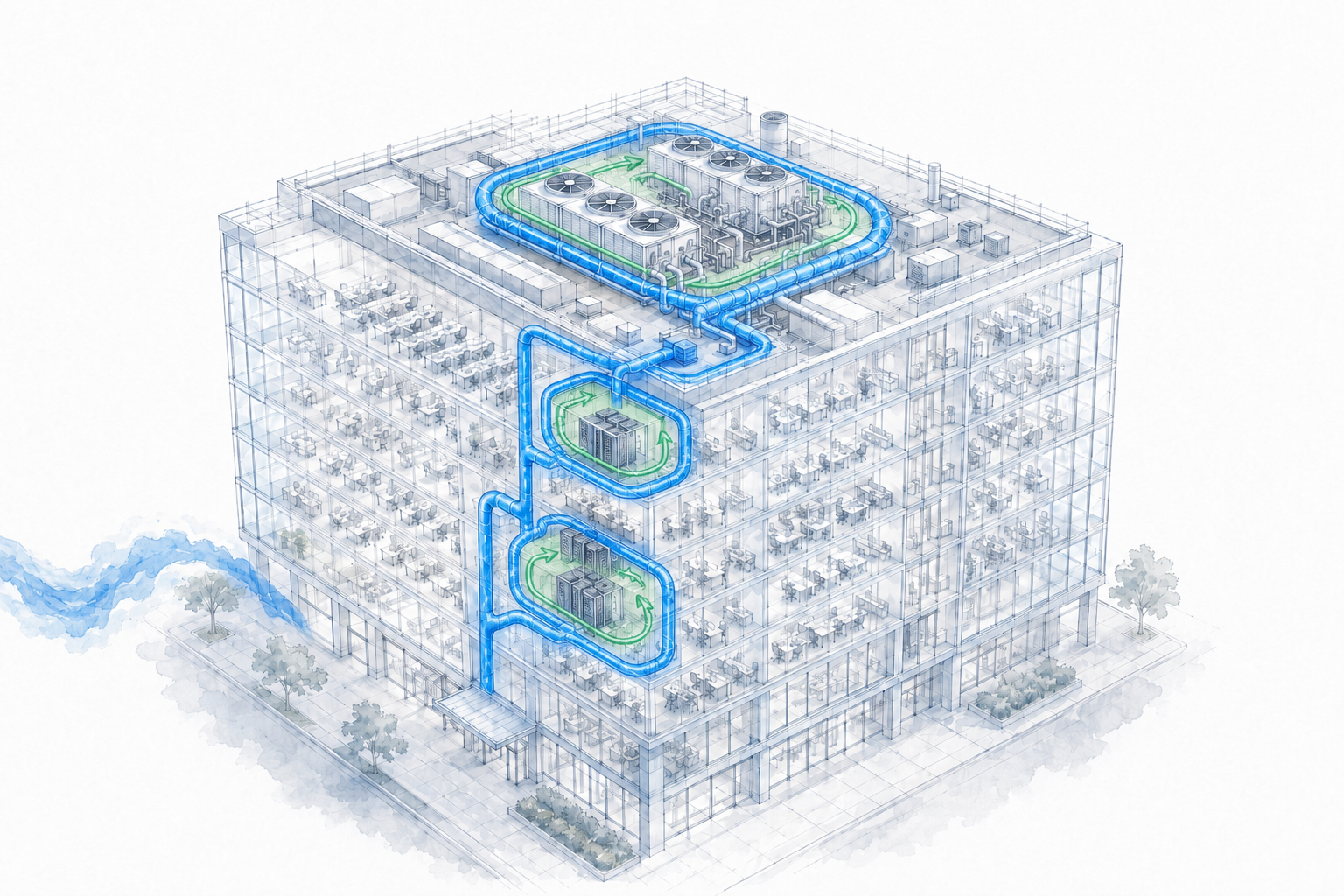
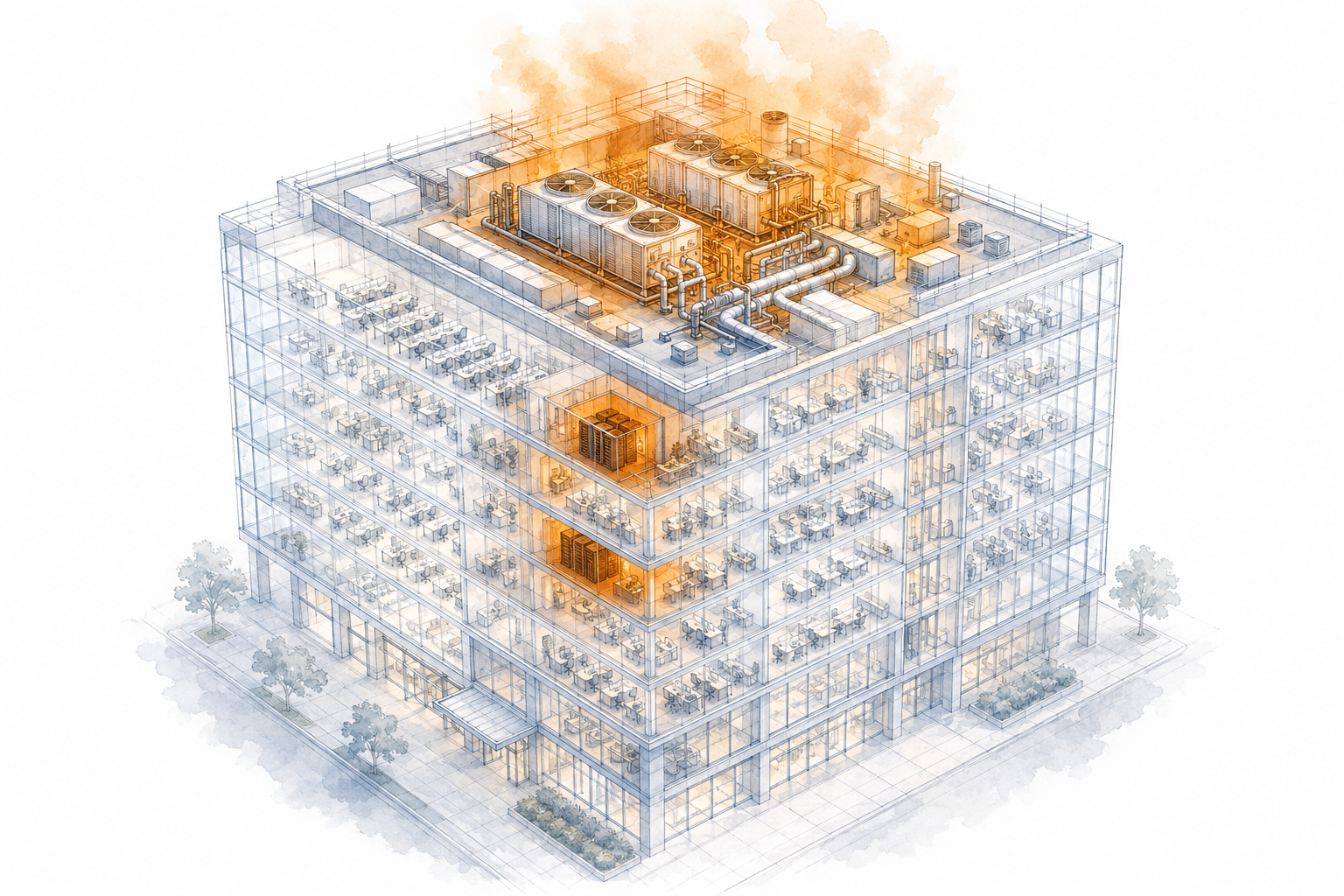
Commercial buildings carry thermal burden on every floor and in every mechanical system. The rooftop HVAC yard runs at capacity. Server closets and equipment rooms on individual floors concentrate heat that the building's distributed cooling infrastructure was not sized to handle.
The HVAC system cools the air in the space. It does not cool the equipment generating the burden. The hotspot inside the server room remains even when the corridor outside is comfortable.
Energy consumption rises as the system works harder against a burden it cannot reach. Equipment life shortens. Downtime risk increases. The building's thermal performance degrades floor by floor.
Cooling the air in the room is not the same as governing the burden at its source.